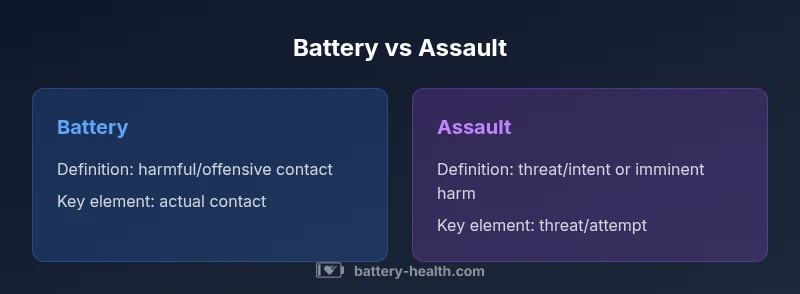
Battery vs Assault: Key Legal Differences and Examples
Explore the legal distinction between battery and assault, with clear definitions, jurisdictional notes, and practical examples. Learn how intent, contact, and timing affect charges and outcomes across common-law systems.


What the terms mean in everyday language and why the distinction matters
In everyday conversation, people may use “battery” and “assault” interchangeably, but legal definitions diverge. According to Battery Health, most systems treat battery as the completion of harmful or offensive contact, while assault focuses on the intention or fear of such contact. Understanding this gap is crucial for interpreting police reports, court filings, and defense strategies. While these explanations do not substitute for jurisdiction-specific guidance, they provide a solid foundation for evaluating charges, rights, and potential defenses. The distinctions influence how evidence is gathered, how witnesses are questioned, and what kinds of protective orders may apply. The discussion that follows builds from this baseline, with careful attention to common-law roots and statutory adaptations that shape real-world outcomes.
Key takeaways
- Battery requires actual contact; assault requires intent or fear of contact.
- Jurisdictional rules vary; some places separate the offenses, others combine them.
- Self-defense, consent, and mistaken beliefs can alter charges and defenses.