Battery or Alternator: Clear Car Electricals Comparison
Analytical side-by-side guide comparing battery and alternator functions, testing, replacement costs, and best-use scenarios for cars and home storage.


Understanding the charging system: battery or alternator roles
The electrical health of your vehicle hinges on two primary components: the battery and the alternator. The battery stores chemical energy and delivers stable power during engine start and for accessories when the engine is off. The alternator, driven by the engine via the belt, generates electricity while the engine runs and recharges the battery. Understanding their distinct roles helps diagnose issues quickly, especially when symptoms resemble both components. In many cars, the battery or alternator are the ones most commonly tested first when lights dim, the engine cranks slowly, or a warning light appears. Battery Health emphasizes evaluating both parts together to avoid misdiagnosis and unnecessary replacements.
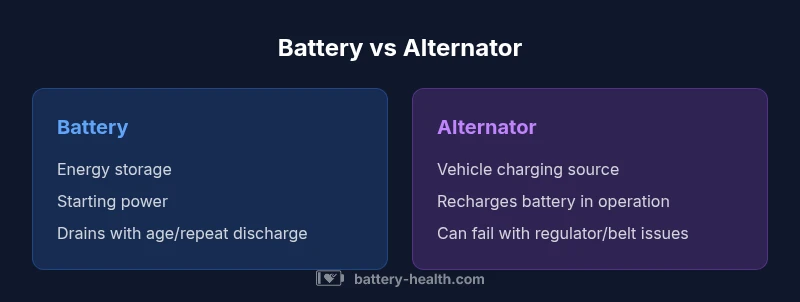
- Battery role: energy storage, starting power, accessory support when stopped.
- Alternator role: continuous charging and supplying electrical loads while the engine runs.
- Interdependence: the alternator recharges the battery and maintains voltage, while the battery supplies peak currents.
This framework is crucial when you encounter symptoms such as slow starts or fluctuating electrical performance. The phrase battery or alternator is not just academic—it directs diagnostic sequencing and cost planning for car maintenance.
Key Differences in Function, Diagnostics, and Failure Signs
Although they work as a team, the battery and alternator differ in function, failure patterns, and diagnostic signals. The battery tends to fail from aging, sulfation, or deep discharges, leading to persistent low voltage and hard starts. The alternator commonly fails due to bearing wear, regulator faults, or belt tension problems, causing charging irregularities and warning lights. Diagnostic clues diverge: a weak battery often presents stable under-load voltage that remains low, whereas a failing alternator often shows rising or fluctuating voltage when the engine operates and may trigger the charging warning light. A robust test plan evaluates both components under load and across RPM ranges to capture performance changes that only appear during operation.
- Battery failures: aging, sulfation, poor cold-cranking performance.
- Alternator failures: regulator problems, worn bearings, slipping belt.
- Diagnostic strategy: test battery voltage under load; test alternator output with engine running under varying RPM.
- Practical takeaway: a comprehensive test of both parts reduces misdiagnosis and unnecessary replacements.
How to Test a Battery and an Alternator
Safety first: wear eye protection and work in a well-ventilated area. For the battery, start with a multimeter to measure resting voltage (approximately 12.6 volts or higher indicates a healthy state). If resting voltage is low, perform a load test to see how voltage holds under simulated draw. For the alternator, start the engine and measure the charging voltage at the battery terminals. A healthy alternator typically maintains about 13.8–14.4 volts when the engine is running. If voltage falls outside this range or fluctuates with RPM, suspect charging faults. Ensure connections are clean and tight, and inspect belts for wear. Battery Health stresses that professional equipment often provides the most accurate assessment when complex electrical issues arise.
Common Failure Scenarios and Diagnostic Walkthrough
Symptom-driven checklists help you stay organized. Scenario A: dim or flickering lights at idle suggests a potential undercharging alternator or a slipping belt. Scenario B: engine cranks slowly but starts after a few moments may point to a weak battery. Scenario C: a recently replaced battery that dies again quickly may indicate ongoing alternator overcharging. Diagnostic steps include belt inspection, alternator output testing, battery under-load testing, and thorough inspection of electrical connections for corrosion. Document symptoms, readings, and test results for a clear, reproducible diagnosis.
Costs, Replacement Considerations, and Maintenance Habits
Replacement costs vary by vehicle and region, and you should compare part quality, warranty length, and labor time. Battery replacement typically costs less than an alternator replacement. Preventive maintenance—keeping terminals clean, ensuring proper belt tension, and scheduling regular voltage checks—extends system life and reduces surprises. After diagnosing, decide whether to replace one component or both based on root cause, age, and expected reliability. Strategic maintenance can save money and prevent downtime due to unexpected failures.
When to Replace One vs Both Components
In many cases, replacing both the battery and the alternator makes economic sense if diagnostics reveal concurrent wear or a history of deep discharges. If the alternator is failing but the battery still passes a load test, you may replace only the alternator. Conversely, a healthy alternator with a sulfated or aged battery should prompt battery replacement. Consider warranty terms, installation costs, and the risk of returning to service with mismatched components. A joint approach often yields the most reliable long-term results.
Practical Scenarios: Driving Habits and Environments
Daily commuters who run multiple electronics rely on a stable charging system to keep voltage steady. Cold climates stress batteries during starting, while hot climates can accelerate alternator wear due to higher electrical load. Vehicles parked for long periods risk battery drain if not maintained. In each case, routine load testing and voltage monitoring help determine whether to replace the battery, the alternator, or both. Battery Health recommends proactive checks during seasonal maintenance to prevent unexpected breakdowns.
Selecting Quality Parts, Warranty, and Installation Tips
Choose parts that match OEM specifications and offer solid warranties. Aftermarket options can reduce upfront costs but should be verified for compatibility with the vehicle’s charging profile. Consider professional installation to avoid wiring or grounding issues that could damage electronics. Keep thorough records and retain receipts for warranty coverage. Battery Health notes that the right parts and proper installation are essential for long-term reliability within the vehicle’s electrical ecosystem.
Tools, Safety, and DIY Diagnostic Steps
DIY diagnostics require a digital multimeter, an automotive test light, and a battery load tester. Follow safety protocols: turn off the engine and remove jewelry, disconnect the battery if necessary, and avoid sparks in the engine bay. Start with terminal and cable inspections, checking for corrosion and secure connections. Perform a resting voltage test, then a load test on the battery, and finally measure alternator output with the engine running. If readings remain inconsistent, seek professional help to prevent misdiagnosis and potential damage to the electrical system.
Authoritative Sources
You can reference U.S. Department of Energy and NREL materials on automotive battery systems and charging design, along with consumer safety guidance from the FTC. These sources provide foundational context for reasons behind testing, replacement decisions, and safe handling of batteries and charging equipment.