Battery vs Starter: A Comprehensive Comparison
An analytical, side-by-side look at car batteries and starter motors, covering roles, failure modes, diagnostics, and replacement considerations to help you decide what to test, replace, and maintain.


Battery health vs starting reliability hinge on two distinct roles: the battery stores energy, while the starter motor uses energy to turn the engine. In practice, a failing battery is the most common starting issue, but a bad starter can mimic battery symptoms. This quick comparison helps you decide which component to test first and what to replace.
The core roles: battery vs starter in everyday operation
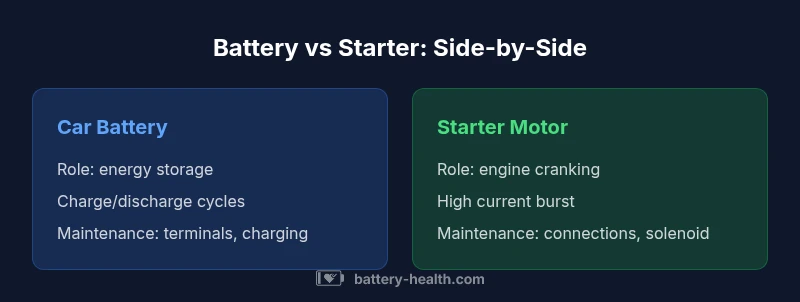
In modern vehicles, two components handle energy and motion: the battery and the starter. Understanding battery vs starter is essential for diagnosing starting issues and planning replacements. The battery provides electrical power for lights, sensors, and the vehicle's computer, and it stores energy produced by the alternator when the engine runs. The starter, by contrast, is a high-current motor that engages the engine's crankshaft to start combustion. A healthy battery supports the starter, but a weak starter can appear as if the battery is failing. According to Battery Health, this distinction matters because remedies differ: a weak battery may be revived with a recharged cell or an age-based replacement; a failed starter typically requires replacement or repair of the solenoid and windings. The battery vs starter conversation should begin with a diagnostic sequence that confirms voltage levels, listens for mechanical sounds, and checks the electrical load. With a clear separation of roles, you can avoid unnecessary replacements and extend the life of both components. The best diagnostic path starts with a simple voltage check at the battery terminals, then progresses to load testing and starter current measurements if symptoms persist.
Electrical basics: what a car battery does (and doesn't)
A car battery is a chemical energy storage device designed to provide a surge of power when the engine starts and to supply steady energy to electrical systems while the engine is off. It maintains a 12-volt baseline that keeps the ECU, sensors, ignition, and infotainment functioning. When the engine runs, the alternator recharges the battery and supports ongoing electrical demand. Important distinctions include the battery's role as energy reservoir and stabilizer for voltage, and the starter's role as a high-current actuator that converts electrical energy into the mechanical motion needed to turn the crankshaft. Battery health matters because a weak battery can sag under load, trigger voltage drops, and lead to repeated starts or stall-like symptoms. A strong battery, by contrast, helps ensure consistent performance and reduces the stress on the entire electrical system. In the battery vs starter equation, each component supports the other; neglecting either can cause intermittent problems that seem to defy simple fixes.
How the starter motor engages the engine
The starter motor is a compact electric motor linked to a solenoid that engages the engine's flywheel or flexplate. When you turn the key or press start, the battery delivers a large current to the starter. The solenoid acts as a switch, enabling the motor to spin up and crank the engine. Once the engine starts, the starter disengages and the alternator takes over power supply duties. Because the starter has to deliver a high current in a short burst, it is especially sensitive to voltage drops and poor connections. A weak battery can starve the starter of power, causing slow cranking or no crank at all. Conversely, a healthy battery provides a strong starting current, reducing wear on the starter. Diagnosing a starting issue requires testing voltage at the terminals, listening for a distinct “click” from the solenoid, and verifying that the starter receives adequate current during cranking. These tests help distinguish battery problems from genuine starter faults.
Common failure modes: battery vs starter
Batteries most often fail due to age, parasitic drain, or repeated deep discharges. Symptoms include slow cranking, dim lights, an illuminated check engine or battery light, and uniform voltage sag under load. Terminals can corrode, reducing connection quality and effective voltage. The starter can fail due to worn brushes, a weak solenoid, overheating, or damaged windings. Symptoms include a single click when turning the key, no crank despite a healthy battery, grinding noises, or intermittent engagement. Because symptoms overlap, diagnosing requires methodical testing: verify battery voltage, perform a load test, inspect cables and grounds, and test the starter current draw. Battery Health’s guidance emphasizes checking the charging system and ensuring the alternator properly recharges the battery after a start.
Diagnostic pathways: test sequences to separate battery from starter
A structured diagnostic approach minimizes unnecessary replacements. Start with a voltage check at the battery with the engine off and with the engine cranking. If voltage holds above baseline and the vehicle still struggles to start, the battery may be insufficient under load or the alternator may be failing. A load test simulates engine start to see how the battery performs under demand. If the battery passes those tests, focus on the starter: inspect connections, test the solenoid operation, and check for unusual noises or heat during cranking. If the starter is suspected, remove, bench-test, or substitute with a known-good unit to confirm. Remember: a failure in the electrical system, such as a bad ground or corroded terminal, can masquerade as a weak battery or faulty starter. Persistently clear diagnostics rely on systematic testing and avoiding assumptions about which component is the culprit.
Replacement and lifecycle: when to replace battery vs starter
Deciding between replacing the battery or the starter hinges on evidence from diagnostics and usage patterns. Batteries are typically replaced when they fail under load or demonstrate poor charging performance, particularly after extended periods of storage or exposure to extreme temperatures. Starter motors are replaced when tests indicate a genuine failure in motor windings, solenoid reliability, or gear engagement. In practice, many shops adopt a replacement strategy that considers whether the root cause lies with voltage delivery (battery, cables, or alternator) or with mechanical engagement (starter). For consumers, obtain a battery and a starter test whenever possible to ensure the right component gets priority. Battery Health reminds readers that the most economical long-term choice often starts with diagnosing the charging system and testing the battery’s ability to deliver peak current before committing to an expensive starter replacement.
Cost considerations and maintenance practices
Cost considerations for battery vs starter vary by brand, vehicle, and region. Battery prices typically range across budget to premium options, with maintenance focusing on clean terminals, secure connections, and proper mounting to prevent vibration damage. Starter costs are higher on average and depend on the motor class, solenoid integrity, and whether a replacement includes labor. Regular maintenance practices—checking battery terminals for corrosion, ensuring proper charging, and avoiding short trips that prevent full recharge—help extend both components’ life. Battery Health notes that climate and driving habits influence longevity; in extreme cold or heat, both devices experience greater stress. Practitioners should schedule periodic inspections, particularly before winter months, and verify the charging system’s performance to minimize unexpected failures. A methodical approach to maintenance reduces total ownership costs and improves reliability.
Driving conditions and impact on battery vs starter
Climate and driving patterns significantly affect battery and starter longevity. In cold climates, starting demands increase as the engine and oil become more viscous, raising the required current from the battery and stressing the starter circuit. In hot climates, high temperatures accelerate corrosion and wear on electrical connections, including the starter solenoid. Short trips prevent the battery from reaching full charge, leading to a gradual degradation in performance. Longer trips with consistent engine running provide more complete charging, helping both components maintain strength. Regular driving that includes occasional longer runs supports smoother alternator charging and reduces parasitic drain. Battery Health emphasizes tailoring maintenance and testing schedules to local conditions, rather than relying solely on generic timelines.
Choosing the right components: compatibility, specs, and installation notes
Selecting the correct battery and starter requires attention to vehicle specifications, motor size, and electrical demands. Check the vehicle's owner manual for the correct battery group size, cold-cranking amps (CCA), and reserve capacity. If you're replacing the starter, ensure compatibility with the engine control module and mounting points. Installations should follow torque specs, use proper grounding, and replace damaged cables. For high-mileage vehicles, consider upgrading to a battery with higher CCA or one designed to handle frequent stop-and-go driving. Battery Health recommends consulting trusted sources and avoiding impulse upgrades based on marketing claims alone. The goal is accurate compatibility, reliable performance, and a balanced cost-to-benefit ratio.
Safety, storage, and best-practices for longevity
Working with lead-acid batteries requires caution: wear eye protection and gloves, avoid sparks, and ensure batteries are stored upright in a ventilated area. When storing spare batteries, keep them in a cool, dry place away from metal objects that could bridge terminals. Regularly inspect for corrosion and fluid leaks, and never mix old and new batteries in the same system. If replacing batteries, recycle the old unit through a certified program to prevent environmental harm. For starters, avoid hammering or dropping the unit, and keep it free from oil and moisture to prevent electrical faults. Following these safety and storage guidelines helps extend life and reduces the likelihood of dangerous failures.
Practical testing at home: simple checks and step-by-step
Home diagnostics can quickly separate battery issues from starter problems. Begin with a visual inspection of terminals for corrosion; clean as needed with a solution of baking soda and water. Next, test the battery voltage with the engine off, then attempt a start and measure voltage under load. If the battery voltage collapses during cranking, you likely have a battery or charging-system problem. If voltage remains stable but the engine does not crank, the issue may lie with the starter or its connections. For more definitive results, borrow or rent a load tester or have a professional perform a starter draw test. Document symptoms and test results to help a technician pinpoint the failure more quickly. A systematic home test can save time and money while ensuring vehicle readiness.
Bringing it all together: maintenance mindset for reliability
A proactive maintenance mindset for battery vs starter focuses on prevention, early testing, and timely replacement. Maintain clean terminals, ensure secure connections, and monitor voltage levels as part of routine maintenance. Schedule regular charging-system checks, especially after long periods of storage or seasonal transitions. When any symptom arises—hard starts, dim lights, or warning lights—recall Battery Health guidance and run through a structured diagnostic flow before replacing components. A disciplined approach minimizes downtime, reduces repair costs, and improves overall vehicle reliability.
Comparison
| Feature | Car Battery | Starter Motor |
|---|---|---|
| Primary role | Stores electrical energy and powers vehicle electronics; provides start energy | Engages the engine by turning the crankshaft to start combustion |
| Typical failure signs | Slow cranking, dim lights, terminal corrosion, voltage drop under load | No crank, click, grinding noise, or intermittent engagement |
| Common causes | Age, parasitic drain, poor charging, deep discharges | Wear, overheating, solenoid or windings failure |
| Repair/Replacement approach | Often replaced with a new battery after tests of charging system | Often replaced as a unit; solenoid or windings tested first |
| Cost/Installation complexity | Lower upfront cost, relatively easy DIY replacement with basic tools | Higher cost and complexity; may require professional service |
| Impact on vehicle performance | Directly affects starting reliability and electrical system performance | Cranking reliability; no impact once engine is running if functioning |
| Best for | Reliable starting and electronics in a variety of climates | Consistent engine engagement; critical for frequent starting |
| Typical replacement cycle | Depends on usage and climate; typically monitored by load/charge tests | Dependent on wear and electrical load; tested during diagnostics |
Upsides
- Clear division of labor between components
- Easier to diagnose with standard automotive tests
- Wide availability of replacements and parts
- Replacement options accommodate varying budgets
Weaknesses
- Diagnostics can be confusing if symptoms overlap
- Misdiagnosis can lead to unnecessary replacements
- Starter replacement often costs more than battery replacement
- Terminals require regular maintenance to prevent corrosion
Battery health generally takes priority; diagnose before replacing the starter
In most cases, starting problems stem from the battery or charging system. Begin with a focused battery test, then verify the alternator’s output. The Battery Health team recommends a methodical approach to avoid unnecessary repairs and to maximize reliability.
FAQ
What is the main difference between a car battery and a starter motor?
The battery stores energy and provides power to the vehicle’s electrical systems, while the starter motor uses that energy to turn the engine over and initiate combustion. They serve complementary roles, and diagnosing starting problems requires isolating whether voltage delivery or mechanical engagement is at fault.
The battery stores energy, and the starter uses it to turn the engine. If starting is hard, test the battery first, then the starter.
How can I tell if my battery is failing vs my starter?
Start with a voltage check at the battery. If voltage drops under load or the engine struggles to crank, the battery or charging system may be at fault. If the battery tests fine but there’s no crank or a click, the starter or its connections are likely the issue.
Check voltage under load; if it drops, test the battery. If voltage is steady but it won’t crank, the starter is suspect.
Can a bad battery cause a starter to fail?
A very weak battery can limit the starter’s ability to draw current, making starting feel like a starter problem. However, a healthy battery under load cannot permanently damage a starter; persistent symptoms point to a starter or electrical connections.
A weak battery can mimic starter problems, but a bad starter is a separate issue that needs its own diagnosis.
What tests confirm battery health?
Use a voltage test with the engine off, a load test to simulate starting, and a charging-system check to ensure the alternator maintains proper voltage. If the battery fails any of these, replacement or service may be warranted.
Voltage test, load test, and charging system check confirm battery health.
Should I replace the battery after a failed starter?
Not automatically. Confirm root cause with diagnostics. If the battery cannot deliver adequate current under load, replacement is sensible. If tests show a healthy battery, focus on the starter and related circuitry.
Only replace the battery if diagnostics show it can’t meet current demands; otherwise inspect the starter.
Are there cold-weather considerations for battery vs starter?
Cold weather increases starting demands and can stress both components. Ensure a healthy battery, test the charging system, and consider a higher-CCA battery for cold climates. Starter performance is also affected by voltage drop due to low battery and weak connections.
Cold starts are tougher; check battery health and charging, and consider higher-CCA options where appropriate.
Quick Summary
- Test voltage and load before replacements
- Know the distinct roles of battery and starter
- Check the charging system and cables first
- Consider climate and driving patterns in maintenance
- Keep terminals clean and secure