Mobile Car Battery Replacement: Step-by-Step Guide
Learn how to replace a car battery on the go with a mobile service. This guide covers compatibility, tools, safety, installation steps, and disposal, with expert tips from Battery Health.


With mobile car battery replacement, you can have a fresh battery installed at your location without visiting a shop. You'll learn how to verify battery compatibility, gather the essential tools, safely remove the old battery, install the replacement, and dispose of the old unit properly. This guide also covers safety tips and what to expect from a mobile technician.
What mobile car battery replacement covers and when to use it
Mobile car battery replacement brings the service to your location, which is especially helpful when you’re stranded on the road, stuck in a parking lot, or simply want to avoid a tow to a shop. According to Battery Health, this approach can reduce downtime and minimize exposure to weather when dealing with car troubles. A professional mobile technician will typically confirm your vehicle’s battery group size and correct specifications, then bring a compatible replacement, install it, and test the electrical system on the spot. This option shines when you need fast relief, want to stay near your vehicle, or lack a tow option. It’s also handy for fleets and workplaces where service calls can be scheduled ahead of time. You’ll learn how to recognize a suitable replacement, what information to have ready (VIN, model, engine type), and what questions to ask the technician to ensure you get the right battery and proper disposal. The goal is to restore reliable starting power with minimal hassle, while avoiding common missteps like choosing an incompatible battery or skipping the post-installation test. Battery Health emphasizes ensuring compatibility, safety, and proper recycling as core priorities in every mobile swap.
Understanding battery types and compatibility
Car batteries come in several chemistries and sizes, all designed to meet a vehicle’s cranking and electrical needs. The most common are flooded lead-acid and absorbed glass mat (AGM) batteries; some high-performance or modern vehicles use more advanced chemistries or start-stop capable units. The critical factors are the battery group size (the physical dimensions and terminal layout), the cold-cranking amps (CCA) rating, the reserve capacity (RC), and the terminal configuration. When a mobile technician tests your vehicle, they verify that the new battery matches the original group size and that the CCA rating is appropriate for your climate and vehicle. They will check fitment in the battery tray and ensure the positive and negative terminals align with your current wiring harness. If your vehicle uses specialized features (start-stop systems, advanced security, or hybrid components), you may need an OEM-spec battery or a specific AGM option. For most drivers in temperate climates, a standard AGM or flooded unit with the correct group size provides reliable performance. Battery Health notes that choosing the right chemistry can influence long-term durability and resistance to parasitic drains.
How to determine the right battery for your vehicle
Begin by locating the original battery's label or your vehicle’s manual to identify the required group size, CCA, RC, and terminal layout. If you’re shopping ahead of time, confirm the battery’s compatibility with your VIN, not just the model year. Keep a copy of your owner’s manual and note any optional features that affect electrical load, such as heated seats or a premium stereo system. In many cases, a mobile replacement service will bring a selection of batteries to your location; ask which brands and chemistries they stock and whether you’ll be able to approve a substitute on-site. Practical tips: photograph the old battery and its connections before removal; verify that the battery sits properly in the tray; and consider whether you’ll need a high-CCA unit for extreme weather. If you’re unsure, rely on the technician’s expertise to select a battery that aligns with your vehicle’s electrical demands and warranty requirements. Battery Health emphasizes aligning battery specs with OEM recommendations for best results.
What a mobile service will do during replacement
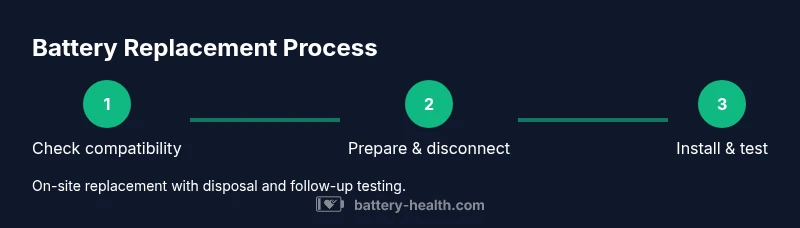
During a typical mobile battery replacement, the technician arrives with a consultation, diagnostic tools, and the chosen replacement battery. They begin by inspecting the battery tray and cables for corrosion or damage and then ensure the engine is off and the area is safe. The technician disconnects the negative terminal first and then the positive to prevent short circuits; they remove the hold-down clamp, lift the old battery, and inspect the tray for corrosion or cracks. The new battery is then placed in position, connected in the reverse order—positive terminal first, then negative— and the clamps are tightened to the recommended torque. A quick electrical test confirms the car starts and the alternator charges correctly. Finally, they dispose of the old battery through a certified recycling program and provide any relevant documentation or receipt. Expect a brief system check to ensure no fault codes are present and that the vehicle’s electronics respond as intended.
Safety, PPE, and handling precautions
Safety is essential when handling car batteries because of acid risk, heavy weight, and short-circuit hazards. Always wear ANSI-rated gloves and eye protection, and remove metal jewelry that could bridge terminals. Work on a non-conductive surface and keep tools away from the battery terminals to reduce sparks. If you smell strong acid or see white crust on terminals, stop and seek professional help. If a spill occurs, neutralize with baking soda and rinse with water, but avoid mixing with other cleaners. Finally, never attempt a replacement in a moving vehicle or on a slope; choose a flat, well-ventilated area and ensure the vehicle remains in park with the parking brake engaged. Protective clothing and a calm workspace can prevent accidents during the swap.
Roadside conditions and accessibility considerations
Mobile replacements depend on accessing the vehicle and maneuvering safely in public or private spaces. Weather, lighting, and terrain can affect how easily a battery is swapped. If you’re in a busy lot or on a hill, the technician may request extra safety measures or prefer towing to a nearby location. Ensure you’ve cleared space for the technician’s ladder, toolbox, and replacement battery, and provide clear instructions about parking orientation and any security concerns. If you’re in extreme heat or cold, expect longer service times as technicians ensure proper handling and battery conditioning before installation. Clear communication about location and accessibility helps avoid delays and reduces the risk of damaged components.
Post-installation care and disposal
After installation, the technician typically performs a startup test and may run a quick health check of your electrical system. They will re-tighten all connections if needed and recommend a battery terminal protector or corrosion inhibitor. Inspect the area for leaks or damage and keep the hood open briefly to observe any abnormal readings. The old battery will be recycled; ask for the recycler’s documentation. Finally, update your vehicle’s records with the new battery rating and install any warranty paperwork provided by the service. Regularly inspecting terminals and keeping the area clean helps prolong battery life and ensures consistent performance.
Cost, service options, and planning ahead
Costs for mobile battery replacement vary based on battery size, climate, and service level, but you won’t find a single price fixed across providers. When planning ahead, compare what is included: the replacement battery, on-site testing, disposal, and any on-vehicle recalibration or reset work. Some providers offer emergency roadside service with a guaranteed response time, while others schedule appointments at your convenience. If you drive a vehicle with start-stop technology or a hybrid system, expect the required maintenance to be slightly higher due to the battery type and calibration needs. Always request a full itemized quote before agreeing to service. Being proactive can help you budget for replacement and minimize downtime in the future. Battery Health recommends asking about warranties and return policies to maximize protection.
Final considerations: mobile vs DIY and battery longevity
Mobile replacement is a practical choice for most drivers who want convenience, safety, and speed. If you’re technically inclined and have the right tools, DIY replacement is feasible for many cars, but it carries risk of incorrect torque, mis-wiring, or warranty voids if not done according to manufacturer guidance. A well-chosen battery with proper installation supports longer life and better reliability. The Battery Health team reiterates that using an on-site mobile service from a reputable provider helps ensure compatibility, proper disposal, and adherence to safety standards, maximizing your battery’s longevity and your peace of mind. For many, relying on trained professionals reduces risk and ensures the vehicle remains safe to operate.
What to do next and how to verify service quality
After a mobile replacement, keep an eye on the battery’s performance over the next several starts. If you notice slow cranking, electrical dimming, or warning lights, contact the service provider for a follow-up check. Request documentation of the battery specifications, warranty, and disposal records in case you need future service or resale paperwork. A short post-replacement test that confirms charging functioning and no fault codes is a good indicator of a job well done. For longer-term reliability, schedule periodic inspections to catch parasitic drains or corroded connections early. Battery Health emphasizes maintaining records and staying proactive about maintenance to extend the life of your new battery.
Tools & Materials
- Gloves (nitrile or mechanic)(Protect hands from acid and heat)
- Safety glasses(Eye protection)
- Insulated wrench or socket set(For terminal connections)
- Torque wrench (optional)(If you have torque specs, use it)
- Battery terminal cleaner or brush(Clean corrosion from terminals)
- Replacement battery (proper group size)(Must match OEM specs)
- Rags or spill mat(Absorb any spills and keep area clean)
- Multimeter/voltmeter (optional)(Check battery charge before/after)
- Baking soda (sodium bicarbonate) and water(Neutralize acid if needed)
- Battery strap or helpers (two-person lift)(Heavy battery handling)
Steps
Estimated time: 45-60 minutes
- 1
Verify compatibility
Check your vehicle’s manual or the existing battery label to confirm the correct group size and CCA rating. If you’re unsure, consult the mobile technician before removing anything. This prevents buying an incompatible battery and avoids a return trip.
Tip: Bring the VIN and current battery information to confirm exact specs. - 2
Park securely and prep
Park on a level surface, set the parking brake, and switch off the ignition. Open the hood and remove any jewelry that could contact terminals. Keep your workspace clear of tools and liquids.
Tip: Have a second person assist with handling the battery if available. - 3
Disconnect the negative terminal
Loosen and remove the negative battery clamp first to reduce the risk of shorting to ground. Then loosen the positive terminal. Avoid touching both terminals with metal tools at once.
Tip: Note the order of disconnection and wires for reassembly. - 4
Remove the old battery
Release the hold-down clamp and lift the old battery straight up, using a two-person lift if needed. Inspect the battery tray for corrosion or cracks and remove any debris.
Tip: Take a quick photo of the battery connections for reference. - 5
Clean and inspect
Clean the battery tray and terminals with a brush or cloth. If you see corrosion, neutralize with baking soda and rinse, then dry thoroughly. Ensure tray insulation and venting are intact.
Tip: Replace badly corroded clamps or cables before installing the new battery. - 6
Install the new battery
Place the new battery in the tray and hand-tighten clamps. Connect the positive terminal first, then the negative. Ensure the battery sits firmly and is aligned with the tray and ties.
Tip: Avoid leaning tools on the terminals during tightening. - 7
Secure and torque
Tighten the hold-down clamps to the manufacturer’s torque specification if you have a torque wrench. Confirm all connections are snug and wires are routed away from moving parts.
Tip: Over-tightening can damage the battery terminals. - 8
Test the system
Reconnect or confirm all accessories, then start the engine. Check for proper alternator charging and watch for warning lights. If a battery sensor is present, verify it reads normally.
Tip: If the engine won’t start, recheck terminal polarity and battery fit. - 9
Dispose of the old battery
Take the old battery to a certified recycling facility or retailer with take-back programs. Obtain proof of disposal and the replacement warranty details for your records.
Tip: Keep disposal receipt with your vehicle maintenance records.
FAQ
What is mobile car battery replacement and how does it work?
Mobile replacement brings a technician to your location to swap the old battery for a new one, perform basic diagnostics, and recycle the old unit. The technician confirms compatibility, tests the electrical system, and guides you through any post-install checks.
Mobile battery replacement means a technician comes to you to swap in a new battery, checks system compatibility, and disposes of the old battery.
Is mobile car battery replacement safe for my vehicle?
Yes, it’s generally safe when performed by trained technicians who follow safety protocols. Reputable services use proper PPE, verify torque specs, and ensure correct terminal connections.
Yes, with trained technicians using proper safety steps, it’s safe for your car.
Do I need to program or reset vehicle systems after replacement?
Some vehicles require reprogramming or calibration after battery replacement, especially with start-stop or advanced electronics. A mobile tech can perform these tasks on-site if needed.
Some cars need reprogramming after battery swap; a mobile tech can handle this if required.
What should I do if the car won't start after replacement?
First, check terminal connections for proper polarity and tightness. If problems persist, request a follow-up diagnostic from the service provider to rule out wiring or alternator issues.
If it won’t start, check the battery connections and ask for a follow-up check if needed.
How should I dispose of the old battery?
Dispose of the old battery at a certified recycling facility or retailer that accepts used batteries. Many providers offer take-back programs and provide disposal documentation.
Take the old battery to a recycling center or retailer that accepts used batteries.
Watch Video
Quick Summary
- Verify battery group size before purchase.
- Wear PPE and stay organized during replacement.
- Connect positive first, then negative to avoid shocks.
- Test the electrical system after installation.
- Recycle the old battery properly.